


What is OSSiBD?
Overcoming Self-Stigma in Bipolar Disorder (OSSiBD) is a one-of-a-kind program designed to help reduce self-stigma in individuals living with bipolar disorder.


Stigma & Self-Stigma
What is Stigma?
Stigma is defined as "an attribute that is deeply discrediting"
(Goffman, 1963). Stigma is the negative feeling we have about someone due to a difference in them and is often not even related to that difference.
We are all surrounded by stigma - stigma about race, ethnicity, jobs, socioeconomic status, and certainly mental health conditions. When society at large subscribes to these beliefs, it is called public stigma.
Stigma leads to misunderstanding, prejudice, and discrimination. It prevents us and our society from thriving.


What is Self-Stigma?
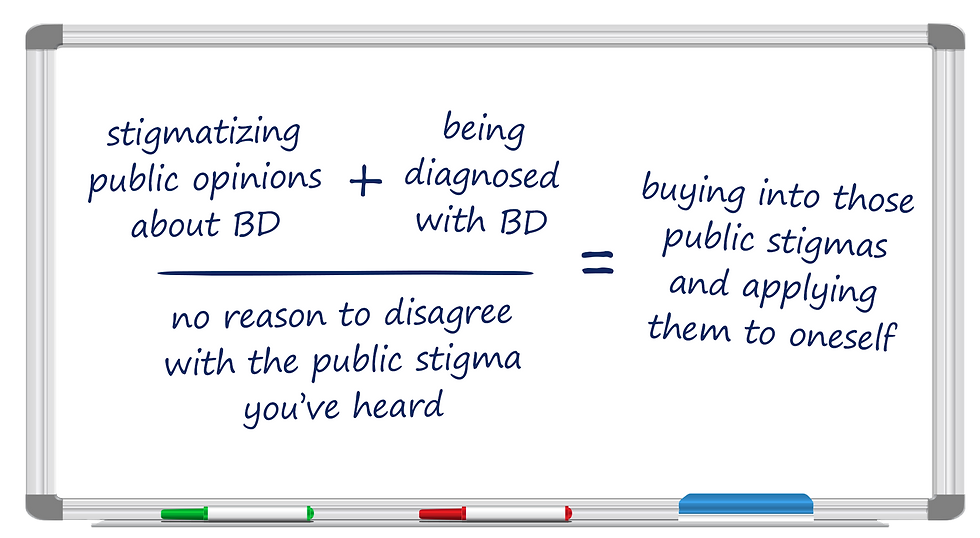
Self-stigma is what happens when people have incorporated these public stigmas into their own beliefs, then get diagnosed with the condition, then turn these stigmas in on themselves. Self-stigma is also when someone feels terrible about themselves simply because they know they have a mental health condition.
Here's an example: Imagine a person has learned a stigmatized view from the general public (ex: people with bipolar disorder are dangerous). Then, this person receives a diagnosis of bipolar disorder. All of a sudden, they instinctively think they must be dangerous, because all people with bipolar disorder are dangerous, right? And that means they're a terrible, useless, shameful person, right?
Self-stigma can also develop when people warp things that are true about themselves due to their condition into something distorted and generalized.
Here's an example: An individual can't make it to early morning meetings because they need to sleep and respect their circadian rhythms. They distort this fact to the extreme and say "I'm useless in the workplace". This isn't helpful and it isn't true.
How Self-Stigma Forms: An Equation
Why Does This Matter?
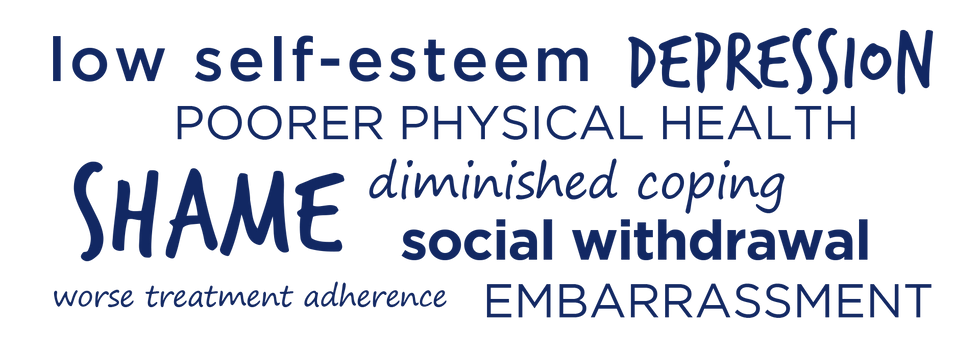
Self-stigma has been tied to a host of negative outcomes for those enduring it.
These include, but are not limited to:

Learn More.
Here are great web and journal links to help you learn more about stigma and self-stigma:
Scholarly journal articles:
Self-stigmatization in bipolar disorder: a systematic review (Richard-Lepouriel, 2021)
Stigma in bipolar disorder (Perich et al., 2022)
Self-stigmatization in patients with bipolar disorder (Latalova et al., 2013)
Mixed-methods analysis of internalized stigma correlates in poorly adherent individuals with bipolar disorder (Howland et al., 2016)
Self-stigma, empowerment and perceived discrimination among people with bipolar disorder or depression in 13 European countries: The GAMIAN–Europe study (Brohan et al., 2011)
General websites:
The Many Impacts of Self-Stigma (National Alliance on Mental Illness, 2021)
Self-stigma and bipolar disorder: What is it?(YouTube video from healthyplace.com, 2019)
What is self-stigma and why does it hurt? (Psychology Today, 2020)
Self-stigma: When mental illness stigma comes from within (healthyplace.com, 2012)
How to overcome the self-stigma of bipolar disorder (a personal reflection from BPHope, 2019)